
Egyptian films based on foreign novels.. Have you seen them?
Novels and films have a special elegance that distinguishes each of them, and in order for reading lovers to enjoy watching films, filmmakers, since the beginning of the film industry in Egypt, have taken upon themselves the task of translating texts of world literature into films that have left their mark on our cinematic heritage.
As for the relationship between Egyptian cinema and literature, the most beautiful films in the history of cinema have always been inspired by literary texts, whether Arab or foreign. Of course, most of these films are successful and famous, and you may have watched a large number of them, but without knowing that they are an embodiment of a global narrative. Through this report, we will take you on a tour of the most important international literary novels, from which wonderful films worth watching have been made.
Hunchback of Notre Dame
The famous classic novel, “The Hunchback of Notre Dame,” by the French writer Victor Hugo, deals with the story of “Quasimodo,” an ugly, hunchbacked young man who is shunned by the people and everyone treats him like a monster. Quasimodo falls in love with a beautiful girl named Esmeralda, and tries to sacrifice his life several times for her. The idea was presented in a film entitled “The Hunchback,” produced in 1946, written by Mahmoud Ismail, directed by Hassan Helmy, and starring Mahmoud Ismail and Samia Gamal.
Crime and Punishment
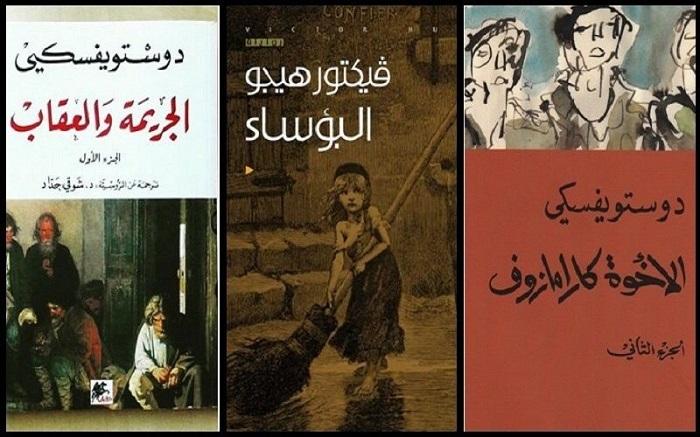
The novel “Crime and Punishment” by Russian author Fyodor Dostoyevsky is one of the most famous psychological and philosophical novels. Its events revolve around a poor young man, “Raskolnikov,” who decides to kill an old woman to steal her money, because he wants to get rid of poverty. Once he committed the crime, he was shocked and was unable to steal many things, as he left most of the old man's wealth intact. He then enters into a psychological conflict and confesses his crime. The idea was presented in a number of works, the first of which was a film bearing the same name as the novel and produced in 1957, written by Muhammad Othman and directed by Ibrahim Amara, and starring Shukri Sarhan and Magda. Then came the movie “Sonia and the Majnoon” in 1977, written by Mahmoud Diab and directed by Hossam El Din Mostafa, and starring Mahmoud Yassin, Nour El Sherif, and Naglaa Fathi. Finally, the movie “Al-Matooh” in 1982, written by Bushra Abdel Malik and directed by Kamal Attia, and starring Mahmoud Abdel Aziz, Afaf Shuaib, and George Sidhom.
Taming of the Shrew
The novel “The Taming of the Shrew” by the English writer William Shakespeare, talks about a wealthy merchant who has three beautiful daughters, the eldest and most beautiful of whom is “Catherine,” known for her ferocity and the sharpness of her tongue, until every man who proposes to her became repulsed by her, which harmed her sisters and contributed to delaying their marriage, as Tradition dictates that the eldest sister gets married first. The father announces that he will pay a large sum of money to whomever Catherine accepts as a husband. Then a rich young man known for his love of money came and proposed to her, and as usual, “Catherine” became agitated, so he attacked her like a madman until he terrified her. He was able to tame her with several different tricks, until she turned into an obedient wife. The idea was presented in several films, including “Ah from Eve” in 1962, written by Muhammad Abu Saif, directed by Fateen Abdel Wahab, and starring Lubna Abdel Aziz, Rushdi Abaza, and Hussein Riad. As well as the movie “Estacosa”, which was produced in 1996, written by Abdel-Hay Adib, directed by Enas El-Deghaidy, and starring Raghda and Ahmed Zaki.
Les Miserables
The novel “Les Misérables” by the French writer Victor Hugo presents the lives of a group of French characters during the nineteenth century, and highlights the character of the poor “Jean Valjean” who stole a loaf of bread and was imprisoned for 18 years because of it. After leaving prison, he enters into conflict with those with power, influence, and the unjust law. The idea was presented in two cinematic films bearing the same name, the first of which was produced in 1943, written by Badie Khairy and Kamal Selim, directed by Kamal Selim, and starring Amina Rizk, Abbas Fares, and Siraj Mounir. The second was produced in 1978, written by Rafiq Al-Sabban, directed by Atef Salem, and starring Farid Shawqi, Youssef Wehbe, Adel Adham, and Laila Elwi.
The Count of Monte Cristo
The novel “The Count of Monte Cristo” by the French writer Alexandre Dumas, tells the story of the young sailor “Edmond Dantès,” who is preparing to marry his lover, and is betrayed by his friends who report him after feeling jealous. The sailor is arrested on charges of conspiring with Napoleon and goes to prison. Edmund escapes from prison and finds a large treasure that one of the prisoners guided him to. He becomes rich and powerful, and seeks revenge on the people who were the reason for his imprisonment. Author and director Henry Barakat presented the idea of the novel in two films: “Prince of Revenge” in 1950, starring Anwar Wagdy, Farid Shawqi, and Samia Gamal. And “The Prince of Savvy” in 1964, starring Farid Shawqi, Shweikar, Naima Akef, and Tawfiq Al-Daqen. She was also presented in the movie “One of the People,” which was produced in 2006, written by Bilal Fadl, directed by Ahmed Nader Galal, and starring Karim Abdel Aziz, Menna Shalabi, Izzat Abu Auf, and Mahmoud El Gendy.
Carmen
The novel “Carmen,” by French writer Prosper Mérimée, revolves around an officer named “Don José,” who falls in love with “Carmen,” a liberated gypsy woman. He leaves his service for her and turns into an outlaw. When she gets tired of loving him and expresses her admiration for someone else, he kills her out of jealousy, buries her in the wilderness, and wanders off. The idea was presented in two works, the first of which was “The Devil is a Woman” in 1972, written and directed by Faisal Nada, and starring Naglaa Fathi, Madiha Kamel, and Mahmoud Yassin. The second work is “Woman Without Chain”, produced in 1980, written by Youssef Al-Sibai, directed by Henry Barakat, and starring Nelly, Widad Hamdi, Hussein Fahmy, and Saeed Eid Al-Fani.
Crime on Goat Island
The play “Murder on Goat Island” by Italian author Ugo Petit tells the story of three women, a mother, daughter, and aunt, who live together on an isolated island with nothing but a herd of goats, after the husband was imprisoned. A strange man appears and introduces himself to them as a friend of the husband in prison, and that he came to them based on his will before his death. The conflict between the women begins when each of them wants to establish a relationship with him, but this conflict ends with them killing the man and throwing him into one of the abandoned wells. The idea was presented in two films, “The Shepherd and the Women” in 1991
Enjoyed this article?
Discover more insights and stories from our blog. Stay updated with the latest trends in digital innovation.