
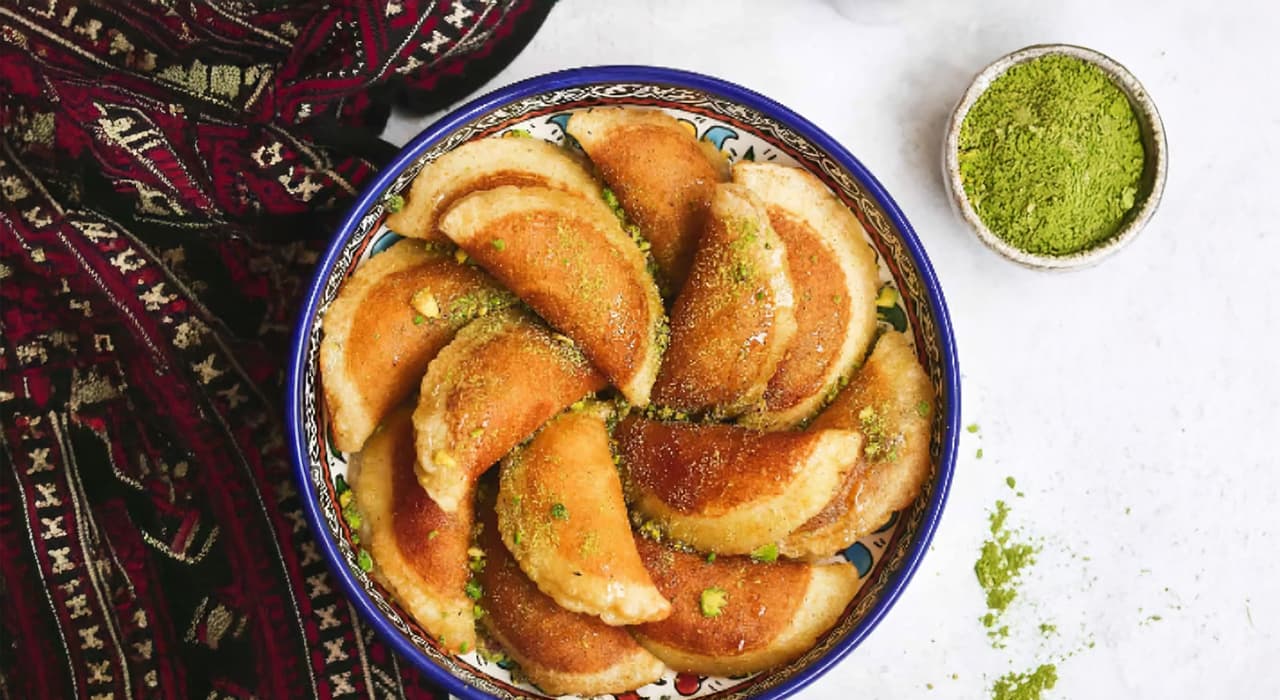
The Origins of Qatayef and the Egyptian Masbouba
By: Eng/Samira Abdelkader
Qatayef or Baghrir or Pancakes are simply various titles for the Egyptian Masbouba which traces its roots back to the era of the ancient Egyptians. These poured pancakes from Upper Egypt date back to the Second Dynasty when they were prepared as honey sweetened delicacies for funerals and as offerings to the gods. This specific recipe is documented in detail within the book The Pharaohs Kitchen by researchers Magda Mehdawy and Amr Hussein.

As established previously the ancient Egyptians created dozens of varieties of bread and pastries as they were the pioneers of fermentation and the global founders of bread making and grain milling. Despite the ongoing debate between historians in the Levant and the Maghreb concerning the origins of Qatayef, historical records prove its earliest appearance was in Egypt. It was already a staple in Cairo during the eighth and ninth centuries long before it emerged in Andalusia during the Almoravid and Almohad eras or even in the Levant.

The same legends associated with Kunafa are often applied to Qatayef claiming that Muawiya ibn Abi Sufyan consumed them during Ramadan upon his doctors advice to endure the fast. There is no historical basis for this. Muawiya was known to have an enormous appetite consuming five to seven meals a day yet neither Qatayef nor Kunafa were ever recorded among the dishes he ate nor did they appear in any literature or poetry from the Umayyad era in Damascus.

Evidence confirms that Qatayef batter is actually the poured pancake inherited from the ancient Egyptian period. During the Fatimid era Egyptian chefs competed to present prestigious recipes by reviving ancient Egyptian culinary traditions and enhancing them with nuts and fruits for the sultans. The batter for Qatayef or Moroccan Baghrir was originally known as Al Muthaqaba and no mention of it exists in Andalusian or Moroccan cookbooks until after the twelfth century when Egyptian culinary techniques spread throughout the region.

Historians recognize the Fatimid era with its capital in Cairo as the golden age of all Oriental cuisine. Notably the non Egyptian rulers who governed Egypt did not typically add to the local heritage but rather adopted from it. This explains why recipes like Msemmen which resembles Feteer Meshaltet and Upper Egyptian Rechta along with meat stews and Bissara migrated to the Arabian Peninsula and the Maghreb. While some regions attempted to claim these recipes they are definitively ancient Egyptian.

This does not imply that Egyptians were not influenced by other cultures as they certainly learned from others and imported fruits previously unknown in Egypt. However Egyptian recipes were consistently the fastest to spread to surrounding nations which is why many Egyptians today find it difficult to believe these dishes are originally their own.

A final point regarding claims that it is impossible to identify dough types from tomb remains is that this information is incorrect. Archaeology does not rely on guesswork and the analysis of bread residues in Pharaonic tombs has confirmed the existence of bread made from liquid batter. This scientific fact was validated by the Egyptian researcher Dr Mennat Allah El Dorry who has made significant contributions to the study of archaeobotany and ancient Egyptian food.

Reference:

Enjoyed this article?
Discover more insights and stories from our blog. Stay updated with the latest trends in digital innovation.