
The Coptic Roots of Egyptian Kunafa
By: Eng/Samira Abdelkader
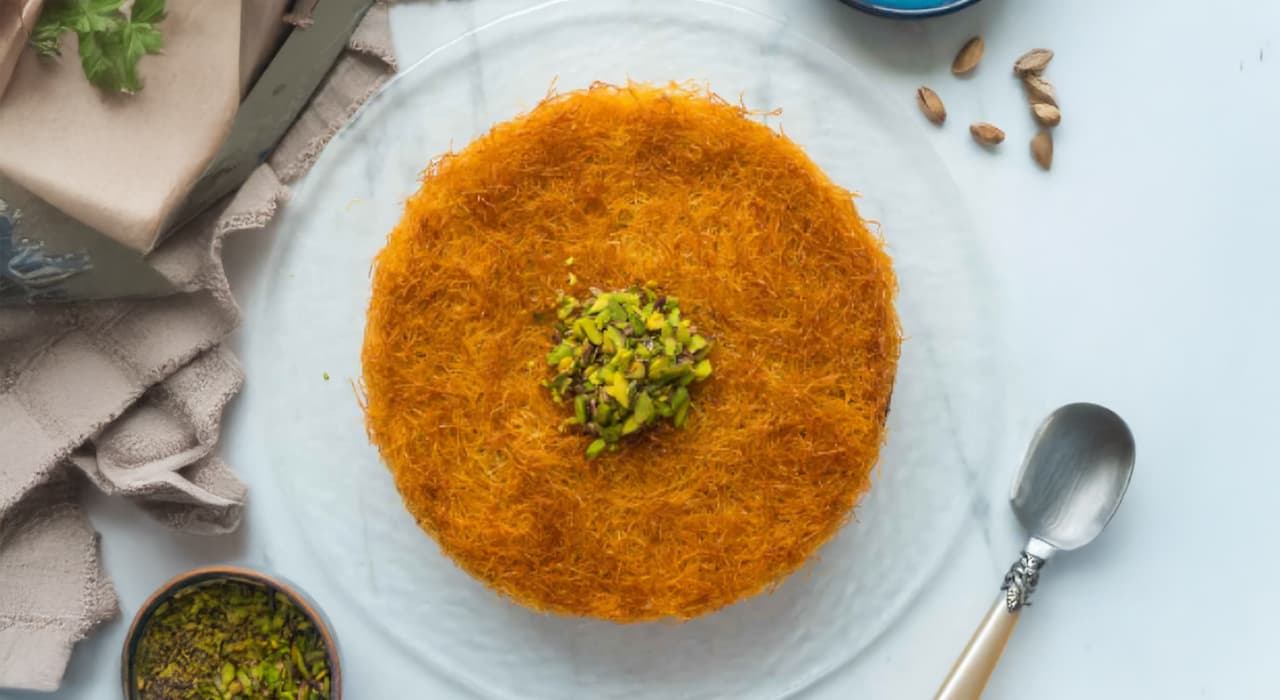
Kunafa is an entirely Egyptian creation. Although it has evolved into a global dessert, its origin is frequently misattributed to the Levant or Turkey, often leaving Egypt out of the conversation completely. Historically, there are two main claims regarding its beginning: one ascribes it to the Egyptian Fatimid era, while the other suggests it was invented for the Umayyad Caliph Muawiya ibn Abi Sufyan to help him endure the Ramadan fast.

However, historians have thoroughly debunked the Muawiya legend despite its popularity in regional media. Muawiya was famously described in historical texts as a man of immense appetite who consumed five to seven heavy meals a day. He would reportedly tell his servants to clear the food only because he was bored of eating, not because he was full. It is highly improbable that Kunafa was his secret to fasting, especially since the exact same story is often recycled for Qatayef.

This myth was first recorded by the Syrian poet Ibn Fadlallah El Omari, who was born five centuries after Muawiya. No contemporary poet or chronicler from the Umayyad period ever mentioned the dish. Furthermore, Kunafa is absent from all records of the early Abbasid period, from the seventh century until the establishment of the Fatimid state in Egypt in the ninth century. Even the most comprehensive culinary manual of the Levant from that time, Kitab al-Tabikh by Ibn Sayyar, makes no mention of Kunafa in the diets of the elite or the commoners.

The most significant revelation is that the word Kunafa itself is Coptic in origin, rather than Syriac or Circassian as many believe. The dish was well established in Egypt and became legendary during the Fatimid era, beginning with the grand reception of Caliph El Muizz L Din Allah. It quickly became a staple of every major Fatimid celebration.

Detailed recipes are found in the Egyptian text Kanz al-Fawaid fi Tanwi al-Mawaid, which is the only Arabic book of its time to document the dish in various forms. These include styles similar to the modern rolled Mabrouma and various fried versions. It was also documented in the bookEl Wusla ila al-Habib under the name EL Akhmimiya, named after the city of Akhmim in the Sohag Governorate of Egypt, further cementing its deep roots in Egyptian soil.

Reference:


Enjoyed this article?
Discover more insights and stories from our blog. Stay updated with the latest trends in digital innovation.