
How did women contribute to the women's cinema industry (advocacy or marginalization)?
Some people become confused when they hear the term “women’s cinema,” as they have in their minds the question: Are these cinematic films that deal with women’s issues and problems, or films made by women to express their opinions and ideas on general issues and topics?
When you look at Egyptian cinema, you might think at first glance that it is based largely on the roles of men, who are considered the primary driver of events, while women appear in their roles as marginalized, weak, and negative most of the time. However, if you delve deeper into the history of the film industry, you will find the names of many women who played a major role in establishing Egyptian cinema. But with the passage of time, their role was marginalized in favor of men, and yet some of them continued in desperate attempts to continue improving the image of women in cinema and addressing issues that concern them.
Aziza Amir... the owner of the first Egyptian film
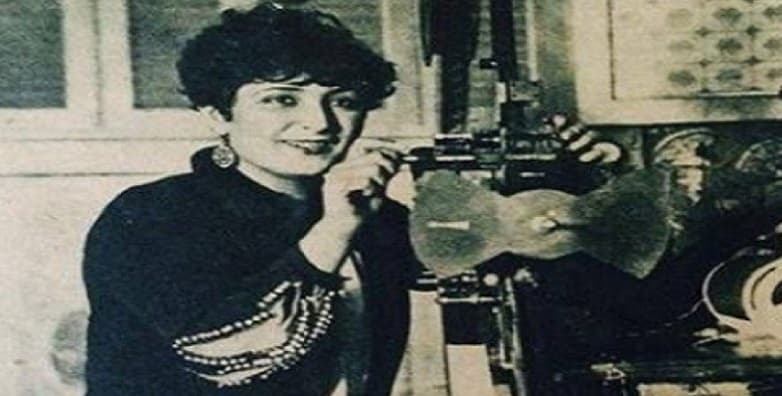
The most prominent of these names is Aziza Amir, who established “Heliopolis Studio” and presented the first Egyptian film in history, in 1927, entitled “Laila,” for which she wrote the script in addition to directing and producing it.
Aziza Amir did not stop at this film, and although she only directed the film “Atonement for Your Sin” in 1933 after it, she did not stop writing, producing and acting for 25 years.
In addition to her role as a pioneer in Egyptian cinema, Aziza Amir helped other women enter the artistic field, at a time when women’s work in cinema was something that was not welcomed by society, as it was considered daring work that did not fit with the customs and traditions of the Egyptian family.
She was followed in her artistic career by Asya Dagher, who became an unparalleled influence in the film industry, after establishing the film production company “Lotus”, which continued for half a century.
We cannot ignore other names of influential female figures, such as Bahija Hafez, Fatima Rushdi, and Mary Queenie, as each of them presented a group of films that had a positive social goal.
Faten Hamama...a women's rights advocate
For a long time, the image of women in artistic works receded, either in the role of the maid and the dancer, or in the role of the mother and the delicate girl who lives a love story with the hero.
However, this image changed in the fifties and sixties, and the able artist Faten Hamama played a role in improving the image of women in cinema, as she contributed to raising important issues related to women in many of her films, such as discussing women’s work in “Ustafa Fatima” in 1952, and issues of honor. In “The Nightingale’s Prayer” in 1959, women’s participation in political life in “The Open Door” in 1963, and the issue of the mother who bears the burdens of the family alone in “The Meem Empire.”
A group of female artists also appeared during that period who presented films of interest to Egyptian women, such as Magda in “Where is My Age” and “Teenage Girls,” Nadia Lotfy in “Black Glasses” and “For Men Only,” and Shadia in “A Thing of Fear” and “My Wife is a Director.” General,” and Lubna Abdel Aziz in “Al-E’ib” and “I Am Free.”
Enas El-Deghaidy...the woman did not do justice to herself
During the 1980s, women's films were limited to presenting the problems and concerns of the middle and rich classes, such as “Ahlam Hind and Camellia,” “The Virgin and the White Hair,” “The Apartment is the Wife’s Right,” and “The Wife of an Important Man.” The situation became worse in the entrepreneurship films of the nineties, which became commercial films that presented the role of women in a superficial way, and moved away from social issues that were important to women.
We find Enas El Deghaidy in her films that insult women and detract from their role in life, and despite Enas El Deghaidy’s keenness at the beginning of her artistic career to present works that support women, to the point of considering changing some of the laws and customs in the country, as happened with the movie “Excuse me, Law.” , who discussed issues of honor and their judicial rulings, which stipulate a light sentence in cases of men killing their wives if they are caught red-handed cheating on him, while sentencing severe punishments that may reach death if the perpetrator of the murder is the wife who saw her husband red-handed cheating on her.
However, most of Enas El Deghaidy’s films were limited to highlighting women in seductive roles, such as “Cheap Meat,” “Dantella,” and “The Red Rose,” in addition to teenage films such as “Disco Disco” and “Teenage Diary.”
We cannot ignore slum films, which completely distorted the role of women, by showing distorted relationships between men and women, which appeared as if their poverty and need for money or security always forced them to give up their honor and principles, such as the films “Heena Maysara” and “Halawat Rouh.”
Has modern cinema succeeded in doing justice to women?
Despite the differences in opinions about the concept of “women’s cinema,” we can agree that the discussion of women’s issues and their role in society has not developed over the years, but on the contrary, it has become more deteriorating and shallower, of course, with some exceptions from time to time, as some films that revolve around Women films such as “678,” “Taymour and Shafiqa,” and “Tell, Scheherazade” performed well at the box office, while other films, such as “Asmaa,” “Two Girls from Egypt,” and “Factory Girl,” did not achieve much success.
Despite these desperate attempts by modern film makers to do justice to women, they have not produced the expected results, and we still have a long way to go until we can overcome the distorted image that the image of women has become in Egyptian cinema over the past decades.
Enjoyed this article?
Discover more insights and stories from our blog. Stay updated with the latest trends in digital innovation.