
Bread
By:Eng/Samira Abdelkader
Imagine tasting a loaf of bread made today using yeast and grains that are over 4,500 years old. This actually happened when an American businessman managed to obtain samples of bread yeast preserved in ancient Egyptian pottery found in a tomb dating back to 2500 BCE. Using a type of wheat known in Ancient Egypt, he baked a loaf of bread just like the ones eaten thousands of years ago. Those who tasted it were incredibly impressed, claiming it was some of the best bread they had ever eaten.

Bread was the primary food for ancient humans. Before the rise of great civilizations, people would grind grains in a primitive way, mix them with water, and flatten the dough on stones to bake in the sun or over hot ashes. Sometimes they would soak the grains in water until they softened completely before spreading them directly onto stones. Gradually, the process evolved into what was known as flatbread, the unleavened bread made from various grains that was common throughout the ancient world.

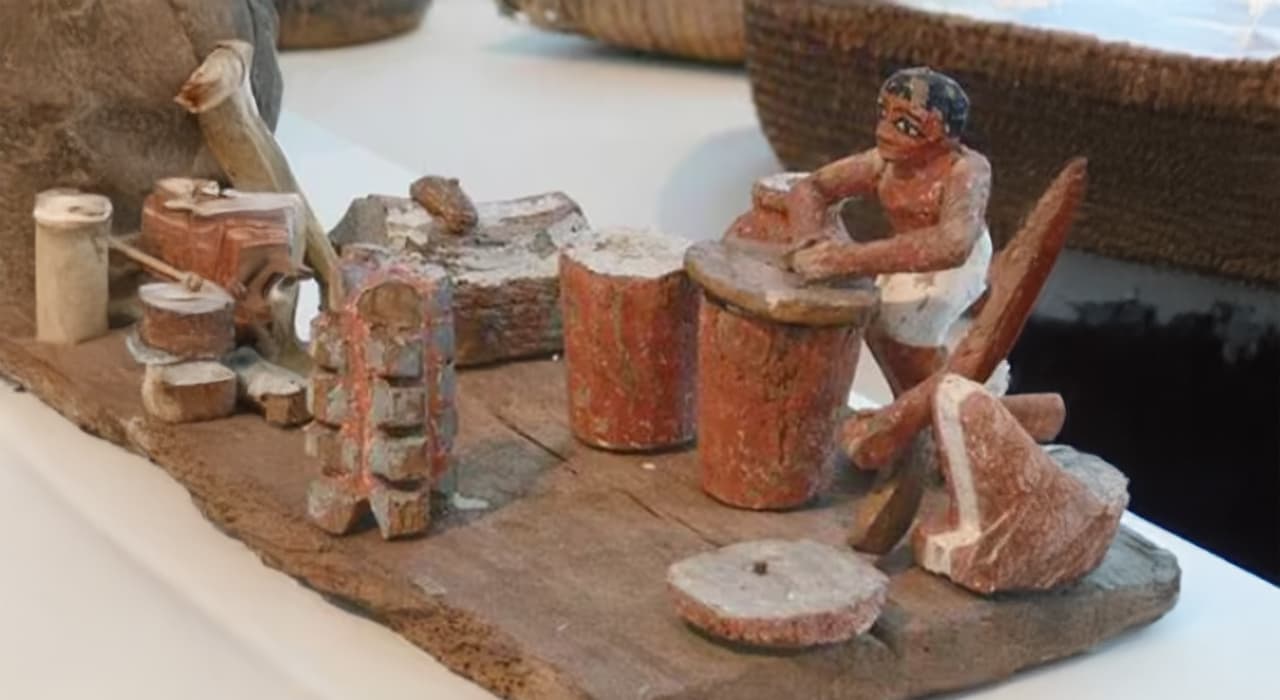
In Egypt, flatbread was made and baked on the walls of ovens built from Nile mud, a type of oven that later became known in other Arab countries as the Tannour. The Egyptians significantly advanced bread making, developing every stage from farming and grinding to kneading and baking. Initially, they used a type of wheat known as Emmer. Because this grain had a hard, tough husk, they used to soak it in water for long periods to soften the shell. After kneading it with water and baking it, they would pick out the remaining husks by hand. To solve this, they invented more powerful ways to grind grain, creating the stone mill known in Egypt today as the Rahaya. We can still see examples of these manual stone tools in various Pharaonic statues.

As mentioned, flatbread is the oldest form of bread in the ancient world, but the Ancient Egyptians pushed it further by using different grains like wheat and barley and adding flavors like fenugreek. Later, they even incorporated dried okra and corn. Many types of flatbread are still known in Egypt today by names like Bataw, Marahrah, Roqaq, or Farashih. Interestingly, the term Pita used in English today for flatbread is actually derived from the Ancient Egyptian word Bataw, which meant food of the Gods, the same name still used for flatbread in the villages and countryside of Upper Egypt today.

Unlike flatbread, leavened risen bread is a process the Ancient Egyptians are credited with discovering first. There are accounts suggesting they discovered fermentation by accident, as they were also the first in the world to brew beer from fermented barley and wheat. They later used this process in bread-making, and vice versa using leavened bread in the brewing process. The largest ancient brewery in the world was recently discovered in Abydos, dating back to the reign of King Narmer around 3100 BCE, making it over five thousand years old. Even though this is the oldest factory found, researchers believe reaching such an advanced technique implies many stages of development spanning hundreds or even thousands of years. Beyond flat and leavened bread, they also made stuffed pastries, layered pies, and toast. Because of this, Egyptians created hundreds of varieties of bread. Researchers state that the oldest loaf of bread ever discovered in the world dates back to 8000 BCE in Egypt, and that the oldest machine used for grinding grain was the one known today as the Rahaya.

Reference:


Enjoyed this article?
Discover more insights and stories from our blog. Stay updated with the latest trends in digital innovation.