
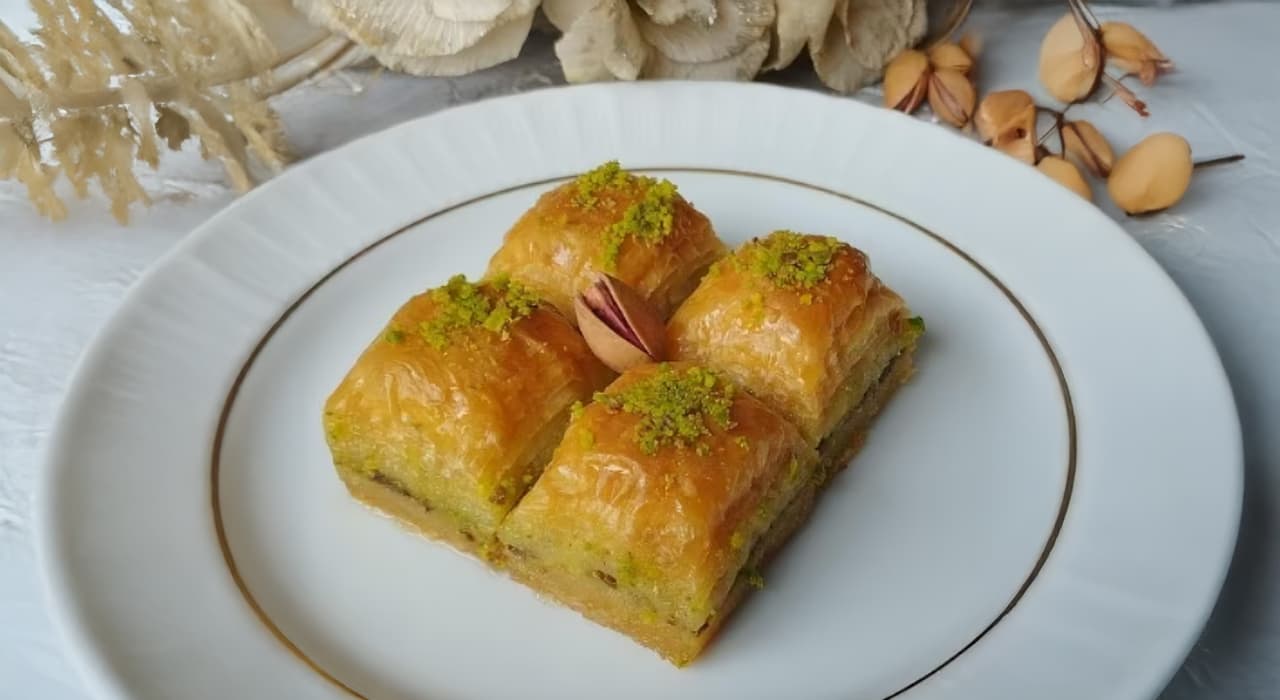
Baklava: The Conflict and the Origins
By: Eng/Samira Abdelkader
Baklava is a world renowned dessert that has sparked intense debate, with several nations competing to claim its invention as their own. Turkey, Greece, Iraq, and Syria have all asserted their roles as the creators of this pastry.

The Assyrian Claim
Syria and Iraq claim that the Assyrians invented the earliest form of Baklava by layering flatbread with fruit and honey. However, this claim is problematic. Firstly, it bears little resemblance to the Baklava we know today. Furthermore, even if we accept this premise, the Ancient Egyptians had already mastered bread in all its forms, including layers filled with both sweet and savory ingredients. In the tomb of King Ramesses III, hundreds of types of baked goods were discovered, some of which involved layers cooked in distinct stages.

The Phyllo Dough Debate
Researcher Delwen Samuel, in her detailed studies of cuisines and pastries found in Egyptian tombs, confirmed the existence of what the Greeks later called "Phyllo." Greece has long claimed to be the inventor of flaky pastry or phyllo dough. While this style of baking is actually closer to a croissant than modern Baklava, the Ancient Egyptians were the pioneers of this technique through "Feteer Meshaltet."

The Turkish Claim and the Asyutia
Turkey claims to have invented Baklava during the Middle Ages using Saj bread known today as Shawarma bread or Roqaq in Egyptian villages. Yet, even this claim points back to Egypt. Roqaq is a type of Egyptian bread that has existed for thousands of years.

The first people to create a sweet dish from layers of Roqaq were the Egyptians. This dish was known as Asyutia, named after the Assiut Governorate in Upper Egypt. It consisted of layers of Roqaq stuffed with dates and nuts, topped with honey or syrup.

Historical evidence supports this:
The name Asyutia appeared in cookbooks across Baghdad and the Levant.
It was documented in Al Baghdadi’s Kitab al Tabikh and the 13th century book Al Wusla ila al Habib.
It was also featured in the 14th century culinary manual Kanz al Fawa'id.
Notably, no documented or detailed recipe of this kind appeared in Turkish records prior to these Egyptian referenced accounts
Reference:


Enjoyed this article?
Discover more insights and stories from our blog. Stay updated with the latest trends in digital innovation.